

Case study · EMX Services
The whole charging-station service in one system, not in Excel
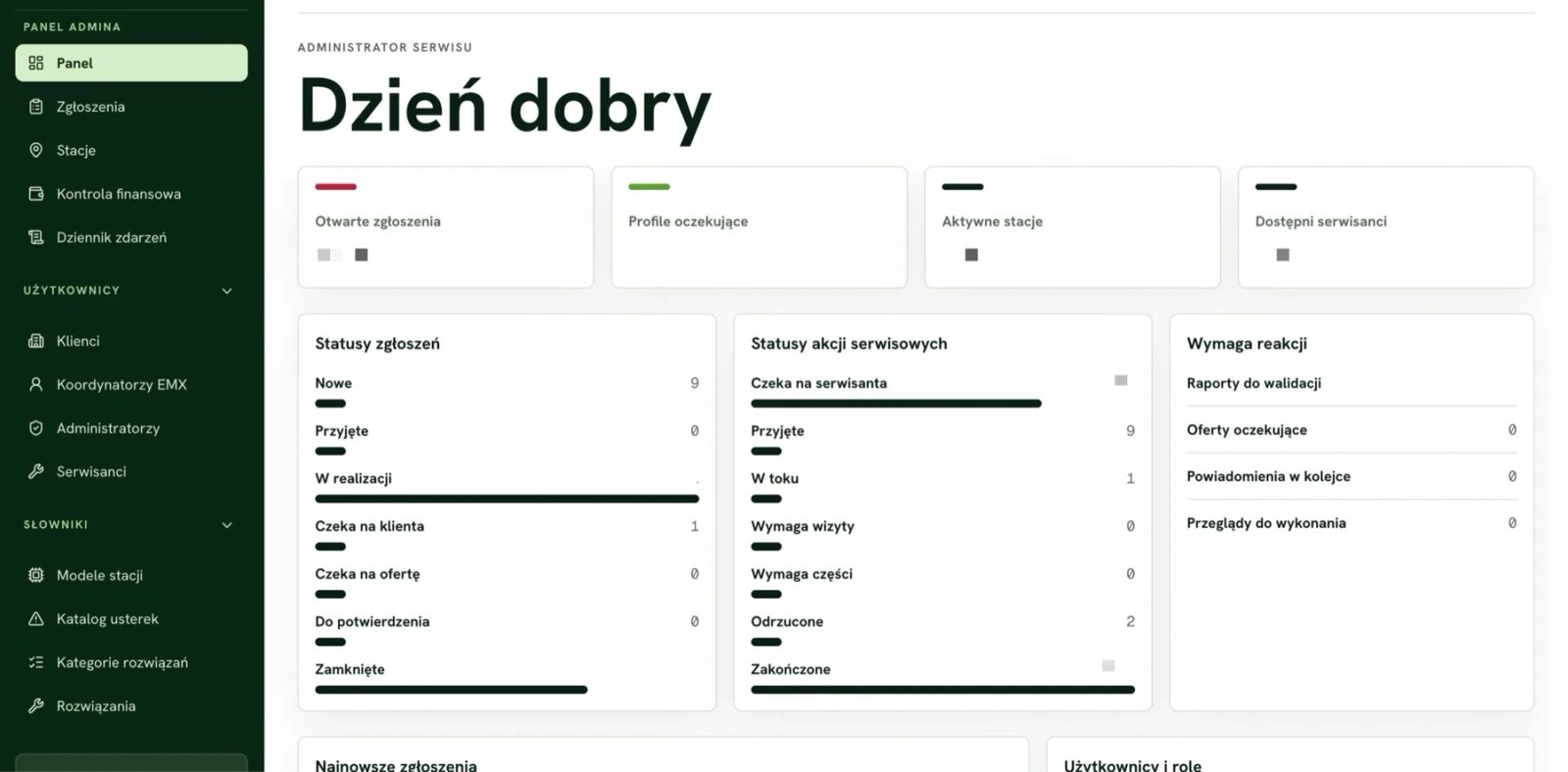
Fault report, technician's work, service report, client sign-off and settlement - previously scattered across spreadsheets and verbal arrangements. We launched a working MVP in about a month and keep developing it.
- Industry
- Electromobility
- Year
- 2026
- Model
- Internal platform (B2B)
- Scope
- Concept · MVP · Ongoing development
- Delivery
What one system changed
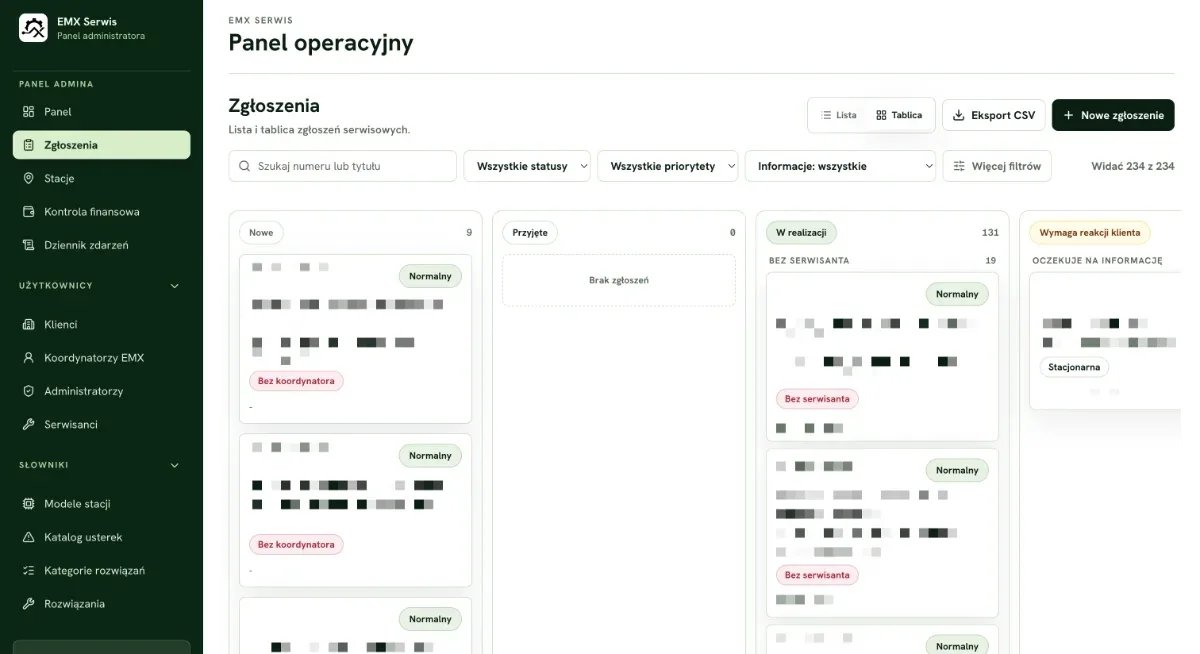
A ticket from fault to settlement
A client or coordinator reports a fault, the technician does the work and files a report, the coordinator approves it, the client verifies. The whole cycle in one flow, with statuses and attachments.
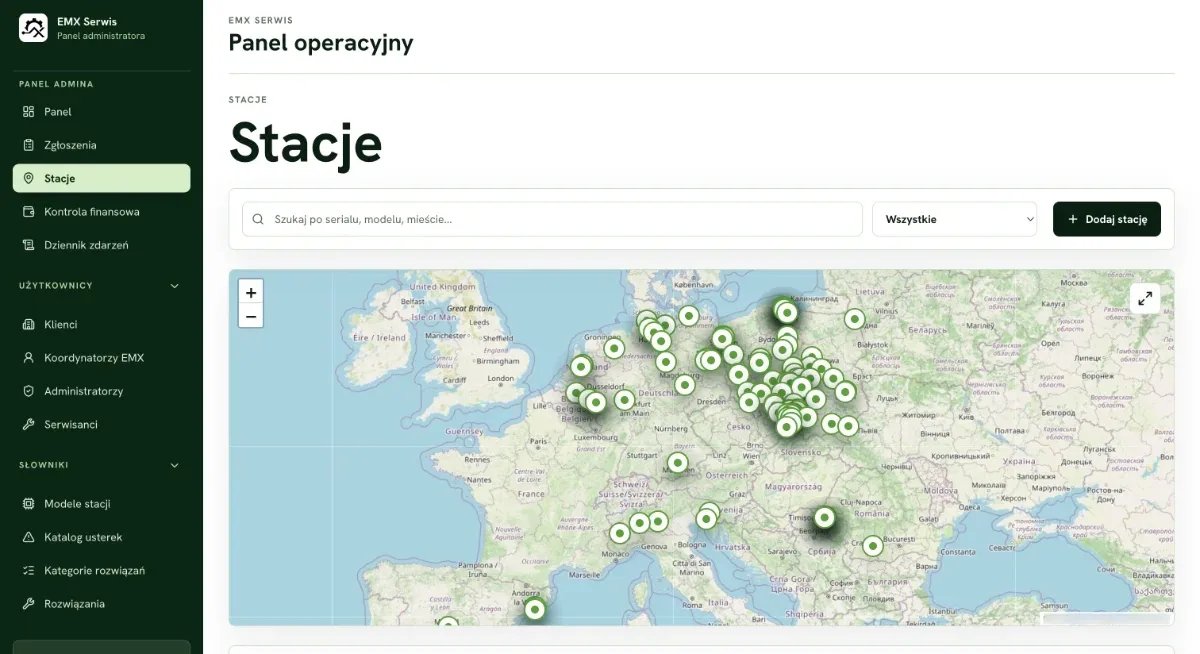
The whole station fleet on one map
A station registry with a map and full technical data: model, serial number, power, warranty and SLA status, access notes, fixed and mobile stations.
The system watches the settlements
Every closed ticket goes to financial review. The administrator always knows where an invoice is due or a settlement is unfinished.
Everyone sees exactly what they should
A role hierarchy - from superadmin to a client with organisation sub-accounts - each with a matching scope of view, technician profiles and secure account setup.
- About
One source of truth instead of spreadsheets
EMX installs electric vehicle charging stations and then services them remotely and on site: configuring, repairing, running inspections and handling warranties. For the end customer, the quality and speed of that service is the entire product - and the company is small, with ambitions to scale quickly into new markets.
That whole process lived in spreadsheets and scattered systems. Technician visits, tickets and repair history were spread across files, some tickets had to be retyped from external systems by hand, and many arrangements were made verbally. With a team of a few people and a growing number of stations across several countries, there was no single source of truth.
The client faced a choice: buy an off-the-shelf ticketing system or build their own. Together we chose a bespoke solution, because only your own product gives full control over the process, a fit to the specifics of charging-station service, and room for further modules. Technology was not an add-on to the business here - it became the condition for scaling it.
We designed and shipped a working MVP that was a production system from day one. The first version took about a month: one developer on a lightweight Next.js and Supabase stack instead of a large team. Roughly a quarter of the time went into planning and architecture - and that upfront effort is what set the pace.
Challenge
A service scattered across spreadsheets and separate systems stopped scaling with the company.
- Tickets and technician visits kept in spreadsheets
- Coordination largely verbal, with no single source of truth
- A team of a few people and stations in several countries at once
Solution
A bespoke system instead of an off-the-shelf tool - full control over the process and room for further modules.
- The full ticket cycle: from fault to settlement
- A station module with a map and technical data
- Roles, service reports and an event log
Result
One source of truth about the whole service process, and a foundation for entering new markets.
- A production MVP in about a month
- 100+ stations across 6 countries from one place
- The end of scattered spreadsheets
- Scope
What we delivered
- Product
See the result
Technologie
We build systems for companies across industries - from marketplaces and online galleries to service platforms.
The next one can be yours.


Norbert Pisz
CEO, CETUSPRO
Book a free consultation - we will talk about your project, the scope of work and the engagement model.